
The Wisdom of the Fool
July 22, 2026 · 10 min read · Mike Mobbs
Subscribe for new posts →Pretending to unfold the cloth, they asked what kind of garments the king desired. The king described them. The swindlers pretended to cut and sew the invisible fabric.
On the day of the festival, they returned with the finished garments. They pretended to dress the king and smooth the folds. The king, still terrified to admit the truth, pretended he could see everything. Thus he allowed himself to be "dressed." Fortunately for him, it was summertime.
The king then mounted his horse and rode through the city. The people saw him wearing nothing at all. Yet each person thought: everyone else must be able to see the cloth. If I admit I cannot, I will be disgraced.
So no one spoke.
At last a black stable servant, who had nothing to lose, approached the king and said:
"My lord, it matters little to me whether you believe I am my father's son or another man's. Therefore I tell you this:
Either I am blind, or you are riding naked."
Example XXXII from El Conde Lucanor, by Don Juan Manuel
Published in 1837 by Hans Christian Andersen, the story of The Emperor's New Clothes can trace its origins at least 500 years earlier to 1335 in Spain and a book of lessons known as El Conde Lucanor, or Count Lucanor.
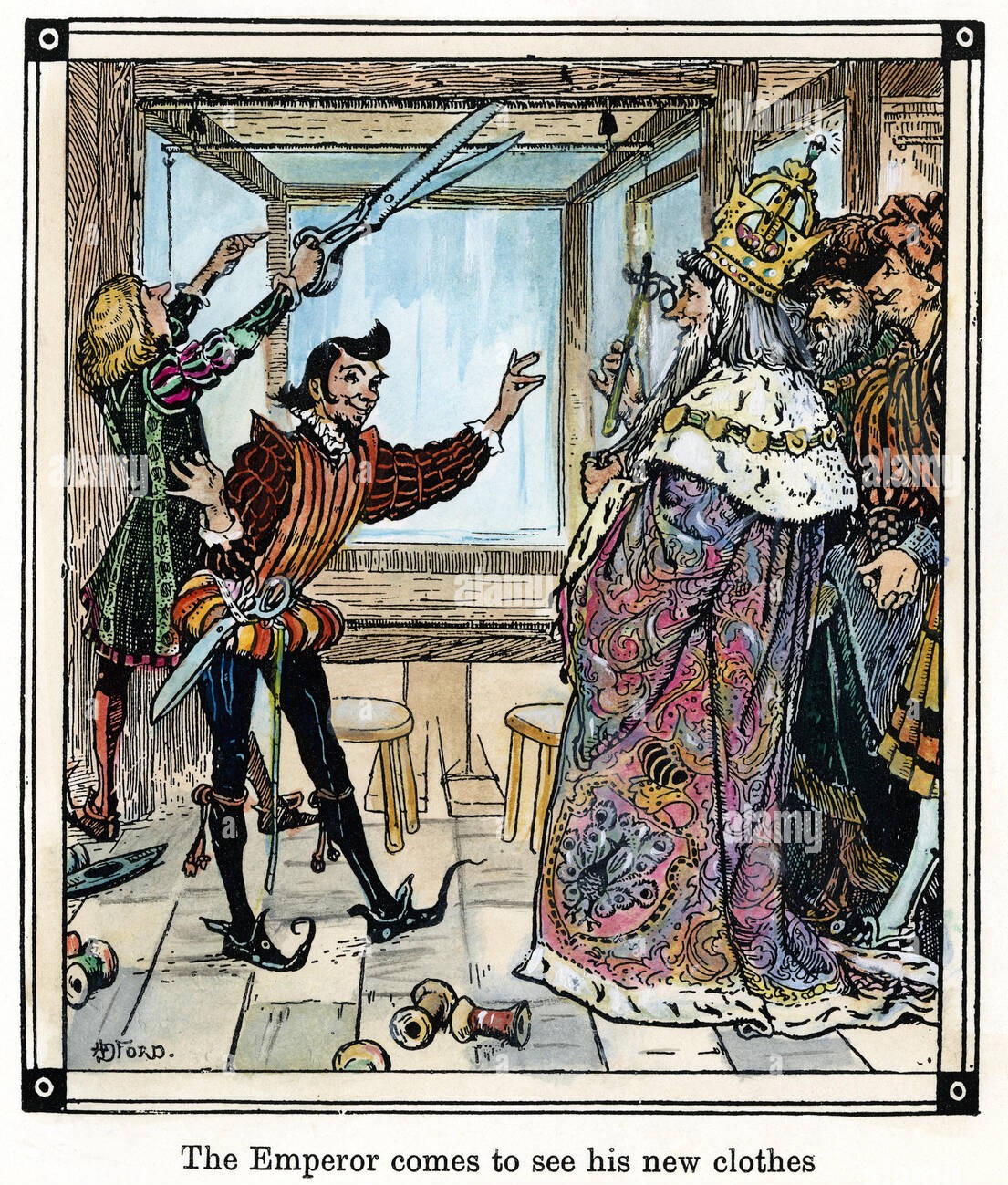
El Conde Lucanor contains 51 short moral tales drawn from India, Persia, the Islamic world and medieval Spain, influenced by a vast network of stories with much earlier roots. For example, El Conde Lucanor - Example XXXII, the inspiration for the tale we now call The Emperor's New Clothes, originates from a 1283 Indian work known as Līlāvatīsāra, or The Essence of Queen Līlāvatī's Story. Līlāvatī's Story is a Sanskrit text that passes down Jain ethical teachings through the telling of the life, rebirth and liberation of Queen Līlāvatī and King Sinha. But even this story is itself a summation of an even older text from 1052 called Nirvāṇalīlāvatī, or The Play of Nirvana.
One story traveled across 800 years from Sanskrit, to Persian, to Arabic, and Spanish, to German, then Danish, to English and on to 100 other languages. Each retelling wove in new concerns, birth status, caste legitimacy, courtly pride, while preserving one essential lesson: the importance of speaking truth to power.
What does it take to speak an uncomfortable truth to someone in power? When a group becomes trapped within a collectively maintained falsehood, how can they break free of their self-deception?
Every group, whether a team, a community, or a society, needs at least one person willing to defy convention and say what others will not.
Enter the Fool.
The archetype of the Fool can trace its origin as far back as the 8th Century BCE and the story of Isaiah in the Hebrew Bible. In Isaiah 20, God commands Isaiah, "Go, loose the sackcloth from your waist and take your sandals from your feet," whereupon Isaiah spent the next three years wandering either naked or nearly so.
What gives this story meaning is the context within which it was written. In this period the Hebrew people were threatened by an expansionist Assyrian Empire while clinging to the hope of Egyptian protection. By shedding his clothes and wandering alone, shamed, vulnerable, and outcast, Isaiah called attention to the reality that Egypt would not offer protection to the Hebrews; that Egypt would leave the Hebrews as naked and unprotected as Isaiah was, that they too risked being left alone, vulnerable and outcast if they persisted in their delusion.
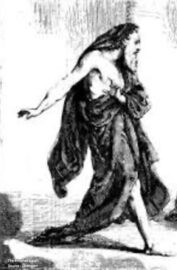
In a direct parallel to the structure of the more modern story in The Emperor's New Clothes, Isaiah 20 shows a Hebrew community that is committed to a comforting illusion, where social pressure prevents honest speech, but a shocking act breaks the illusion allowing reality to become visible.
This archetype in story and character repeats across time.
As retold by Plato, the trial of Socrates gives us another clear example of the Fool archetype. The citizens of Athens accused Socrates of impiety and corrupting the youth of the city and brought him to trial to account for these charges. In Athenian legal convention, the accused was expected to display humility, appeal for mercy, and flatter the jurors. Socrates did none of these. Instead, Socrates argued that he had performed a service for Athens, likening himself to a gadfly sent to awaken a sluggish horse; that while Athens was powerful it was also self-satisfied, and Socrates-the-fly had served Athens by irritating the citizens into self-examination.
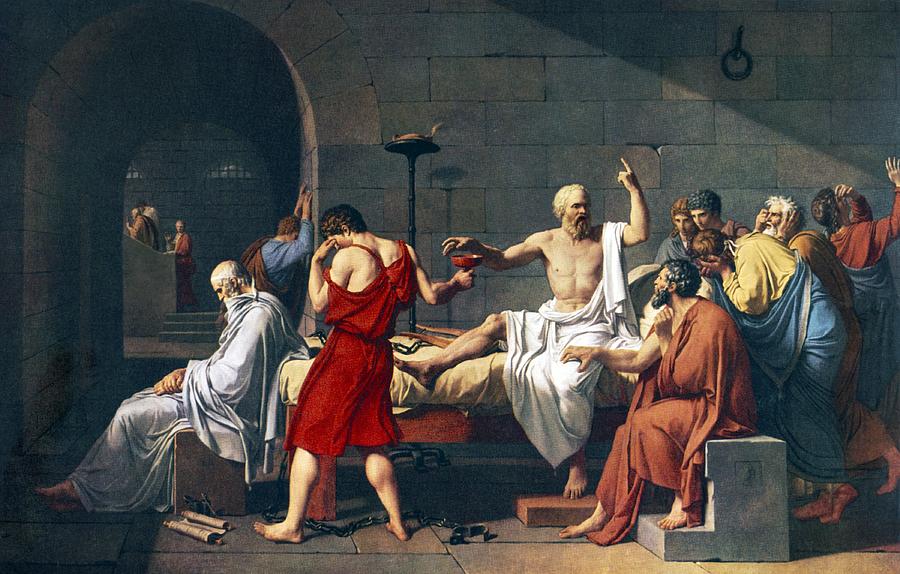
While that irritation would cost Socrates his life, he revealed the Athenian people to be consumed by reputation, political influence, military success, wealth, and the appearance of wisdom. Socrates lifted the veil of collective self-deception and forced Athens to confront the harder questions of whether they were actually just, wise or good. Further, in an insight that reads just as relevant today as it did in 399 BCE Athens, Socrates revealed the clear line between social reputation and actual wisdom; that people of status assumed expertise over matters they truly did not understand.
Across time, cultures and stories, the Fool typically occupies a low status position, appears naïve, ridiculous, or socially insignificant and thus is free from normal status concerns. The Fool speaks truths others cannot or will not speak and so exposes hypocrisy and can reveal a reality hidden by convention or unmask people pretending to perceive something they do not. The Fool cuts through collective self-deception. The Fool is ultimately powerless yet can exercise unrestrained power precisely because he has nothing to lose.
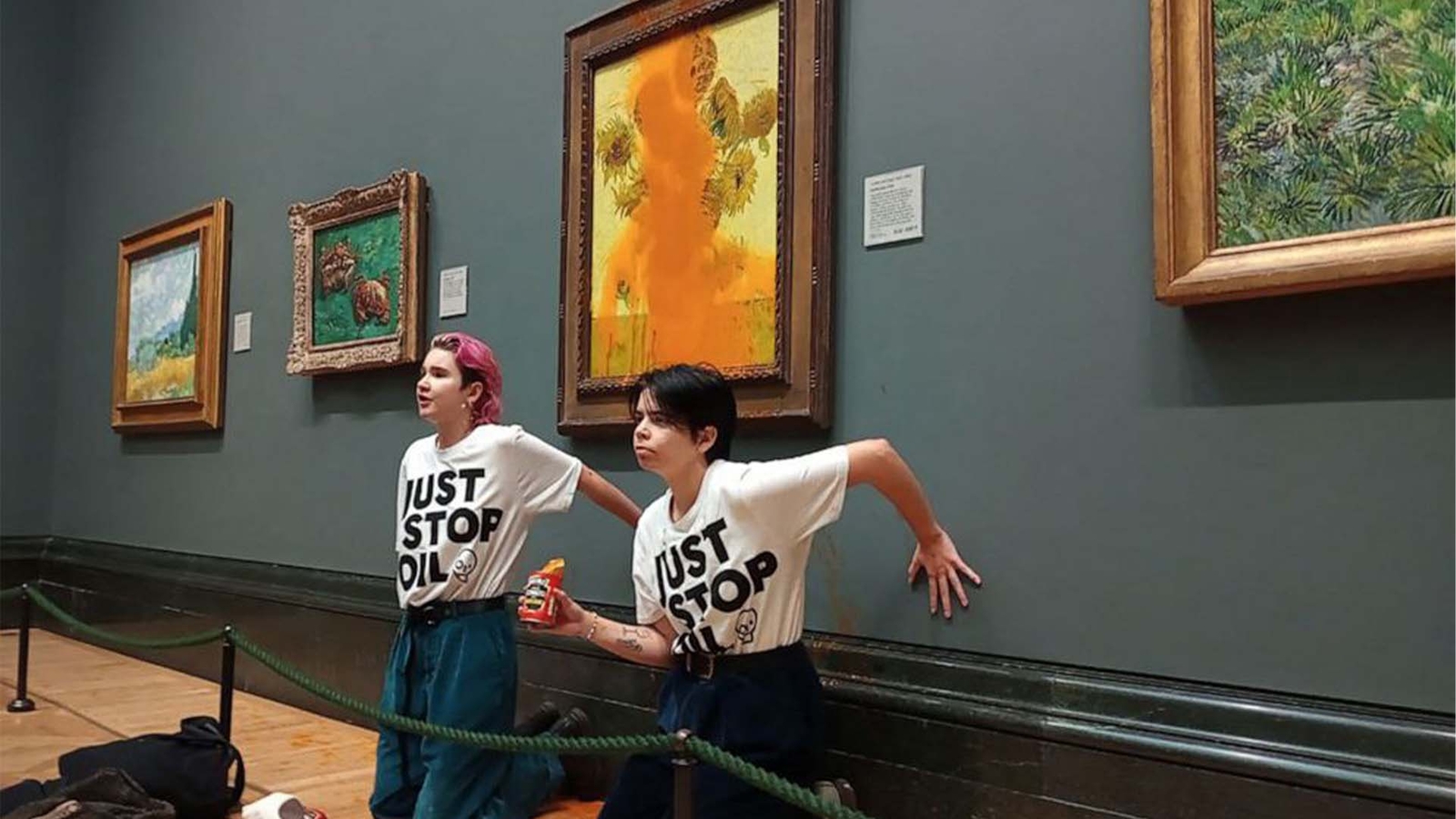
What of the Fool in our own time? Perhaps a loose parallel can be found in acts of public protest. But these tend to circle a debate that is already happening in public, rather than shine a light on a deeper truth. Some acts of protest may certainly appear foolish, but they do not offer the insight of the Fool.
The Fool archetype can only reliably be found in stories because it runs counter to actual human behavior. The Trial of Socrates notwithstanding (as it straddles the line between first-hand account and literary reconstruction), the Fool archetype only fully manifests within a work of fiction. Outside of fiction, the Fool cannot be relied upon to appear when a group needs one, precisely because the behavior runs counter to what we observe in real people. But if we cannot count on the Fool, how do we get the benefit of one?
While fiction allows the Fool to navigate around human behavior, three seminal works of the 21st century tackled human behavior head on by examining risk-taking within teams, the drivers of self-censorship, and the obstacles to speaking truth to power.
Amy Edmondson's 1999 landmark study, "Psychological Safety and Learning Behavior in Work Teams", introduced the modern concept of psychological safety; the shared belief that the team is safe for interpersonal risk-taking. Rather than building a team environment where the members felt they had nothing to lose (as the Fool archetype would imply), psychological safety asked the question: can I say something uncomfortable without being punished? Though answering a different question, psychological safety arrived at the same point as the Fool by identifying the conditions that allowed people to take risks that cut across accepted convention.
Published in 2011 by Detert & Edmondson, "Implicit Voice Theories: Taken-for-Granted Rules of Self-Censorship at Work" examined the unconscious beliefs that drive employee silence. The work revealed that in a hierarchy (that is, almost every type of team), employees carry certain internal narratives:
- Don't embarrass the boss
- Don't challenge authority
- It's safer to stay quiet
- Speaking up is career-limiting
Whereas the Fool eschews rules, examining real human behavior revealed that people remain silent precisely because they internalize rules (real or imagined) about power and hierarchy that result in self-censorship.
Finally, Elizabeth Morrison's 2014 work, "Employee Voice and Silence", revealed that employees often know important information but choose not to share it because they fear interpersonal, political, or career consequences. Meanwhile, the Fool inverts these fears, acting without regard to consequence, an embodiment of the modern definition of "speaking truth to power."
The one thread that runs through each of these studies is that leadership remained the deciding factor for whether teams would take risks, self-censor, or speak truth to power. It is the responsibility of the leader to set the cultural conditions for their teams to flourish. This is likely no great revelation, so the real question is: how?
Once again, enter the Fool.
While the Fool archetype is an artifact of fiction, the role it serves is a key to solving the leadership and team dynamics issues that modern psychology revealed. Rather than risk destabilizing a team by onboarding a disruptive member who by their nature would run counter to a team's values, culture, and customs - as a true Fool archetype likely would - a leader can instead channel the spirit of the Fool through a role I call The Designated Dissenter.
The Designated Dissenter is a role I employed (and filled myself) throughout my career. The Dissenter sits on the perimeter of the formal decision-making process, empowered by the leader to question the team and the leader's thinking, in order to help the group see what they would not on their own. The Dissenter borrows from the Fool archetype by:
- saying what others will not or cannot
- exposing hypocrisy and bias
- Liberated from the conventions that constrain the team while still acting in the team's best interests
I remember one occasion where I served as the advisor to the senior leader but was not myself in a direct leadership role. Our organization was experiencing a wave of significant cultural turmoil: the death of a teammate, the cultural impact of George Floyd's murder, and the isolation of the COVID-19 virus. The junior leaders met with their senior to discuss the impact on the organization, and the outlook was dim. The leaders described a unit that felt isolated, disconnected, mistrustful and adrift. The conversation turned to remedies like individual counseling sessions, group sessions, or more time off. These ideas began to gain momentum until the senior leader asked what I thought.
Having listened to the conversation without yet participating, I shared what no one had yet offered: an answer that I felt was staring us in the face. My answer was that teams form the strongest bonds when they share hardship together, with the real possibility of failure, yet have to rely on one another to see each other through. The answer wasn't to go soft; the answer was to go hard and to give our organization a challenge worthy of their capabilities.

The idea struck a chord, and we ended up planning a day-long challenge that pushed everyone's endurance, strength, and mental fortitude. But it was worth the effort. That day brought everyone together in a way nothing else could and changed the tone moving forward. But the point is not that I had the right idea. The point is that a leader created a culture where a different idea could cut across conventional thinking, delivered by someone granted the standing to do so.
The Dissenter is distinct from an informal "Red Team" or "Devil's Advocate" because the Dissenter belongs to the team, is empowered openly by the leader, is praised openly for the dissent, and hands the role on to someone else.
The Servant from El Conde Lucanor could speak truth to power because he had nothing to lose, he occupied a low-status position and was socially insignificant. But the Dissenter is granted position and significance by the leader. The Dissenter's role works not because he has nothing to lose, but because he has everything to gain.
The ancient wisdom passed down through the framing of stories like The Emperor's New Clothes taught of the dangers of collective self-deception, the consequences of social shame and status anxiety. But these stories also portrayed the rare and invaluable gift of someone who will say what others will not. Someone who is brave enough - or empowered - to act the Fool.