A Life No One Will Ask For
August 25, 2026 · 10 min read · Mike Mobbs
Subscribe for new posts →The Commando's Prayer
Give me, my God, what you still have; give me what no one asks for. I do not ask for wealth, nor success, nor even health.
People ask you so often, God, for all that, that you cannot have any left.
Give me, my God, what you still have. Give me what people refuse to accept from you. I want insecurity and disquietude; I want turmoil and brawl.
And if you should give them to me, my God, once and for all, let me be sure to have them always, for I will not always have the courage to ask for them.
André Zirnheld, Special Air Service, 1938
On the surface, André Zirnheld lived a very comfortable and unremarkable life. Born on March 7, 1913, in Paris, France, to Alsatian parents, André received a Catholic education before attending the Sorbonne to study philosophy. Following graduation, André moved to the French territories of Syria and Tunisia. No doubt André would have continued on this path, the fairly predictable life of an academic.
But, as is often the case in life, this was not meant to be.
The German invasion of France in 1940 changed something in André. The German conquest of France and the Vichy collaboration with Nazi rule propelled André from academic pursuits into service with the Free French as a paratrooper and eventually the elite French Squadron of the British Special Air Service.
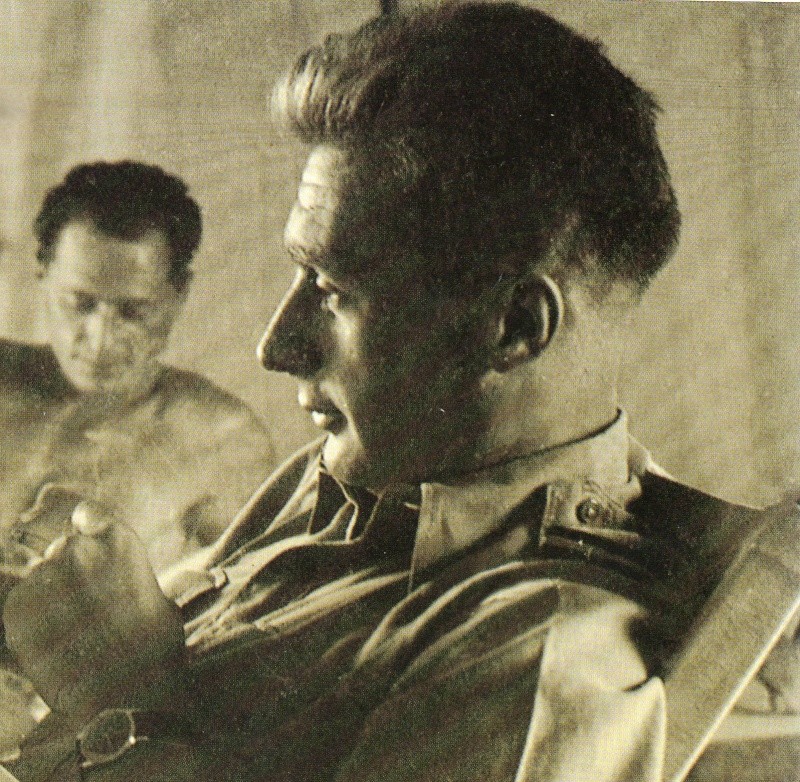
Danger in warfare is relative, but service with the SAS during World War II was uniquely dangerous. The SAS conducted small-scale, highly mobile operations deep behind enemy lines, targeting supply lines, airfields, and communication networks in desert territories throughout North Africa. These operations aimed to weaken German and Italian forces without requiring large-scale conventional engagement. It was on one such mission in 1942, on a raid that destroyed over 30 German aircraft tasked with supporting Erwin Rommel's Afrika Corps, in which André Zirnheld met his end.
The opening prayer was found in André's notebook following his death. Sometimes known as The Commando's Prayer or The Paratrooper's Prayer, André wrote it in 1938 and carried it with him until his passing four years later. It is equal parts prayer and philosophy; fitting, given André's formal education. The prayer is a plea for purpose and meaning through suffering. It also serves as a Rorschach test, revealing the reader's inclination towards either hardship or comfort just as André acknowledges the human weakness for the latter.
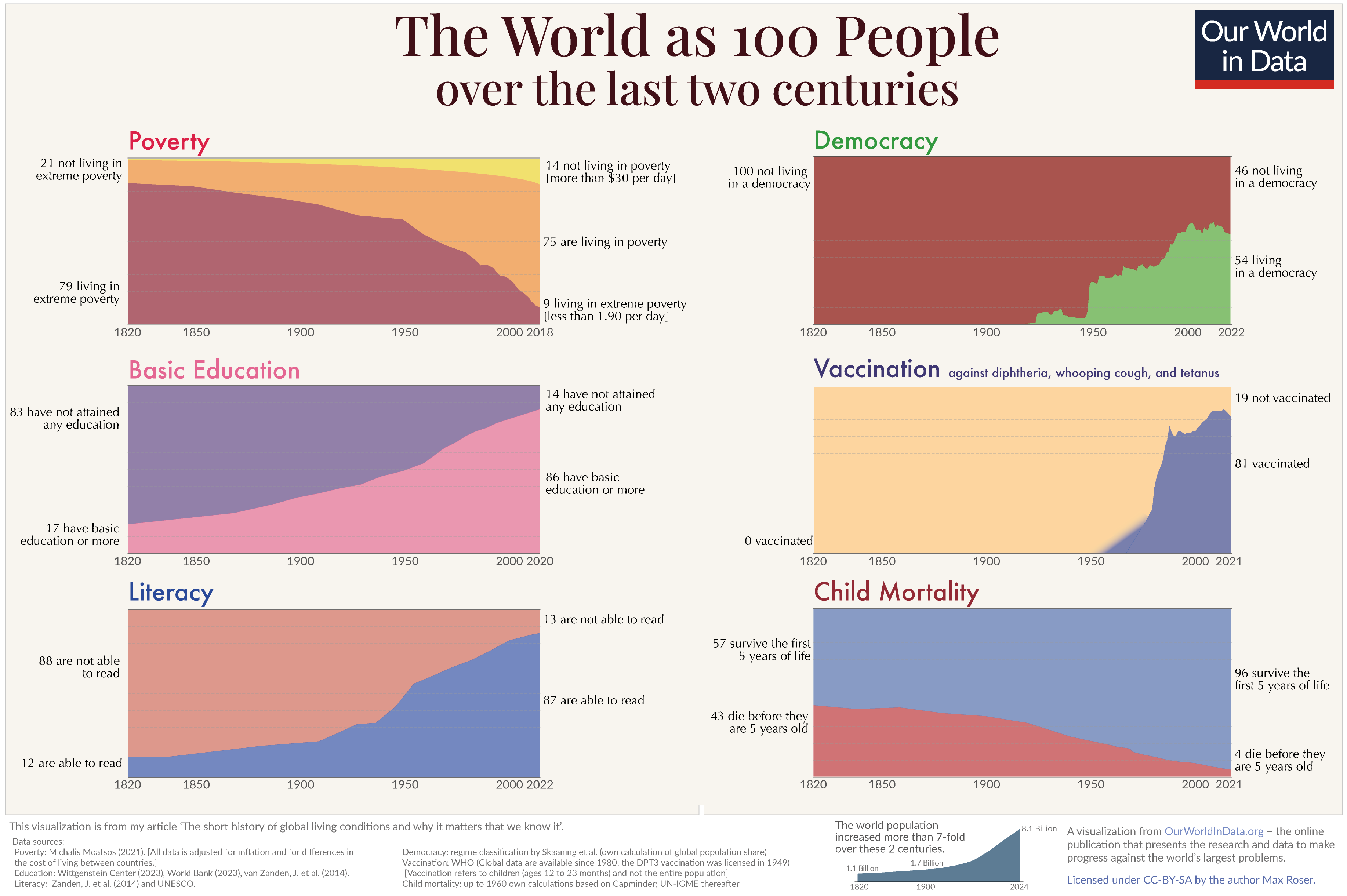
Across neuroscience, ergonomics, psychophysiology, behavior, and even nutrition, study after study demonstrates that the preference for comfort aligns with human biological and psychological well-being. Our world reflects that preference, and in terms of human well-being there has never been a better time to be alive. Across poverty, education, literacy, democracy, healthcare, and child mortality, the data show a clear positive trend.
Of course, as the disclaimer goes "individual results may vary," and the hardest thing a person has ever experienced is the hardest thing they've ever experienced. A round of "Adversity Olympics" is an inevitable race to the bottom; there is always someone who had it harder than you. But while most people will simply experience the random chance of hardships that life can bring, some also feel the contradictory, perhaps irrational, pull to intentionally take on a challenge, to take a risk, to do something hard, to seek what no one asks for.
Seeking some adversity has a measurable benefit. The 2010 study, Whatever Does Not Kill Us: Cumulative Lifetime Adversity, Vulnerability, and Resilience by Seery, Holman, and Silver, compared a validated measure of life satisfaction against the number of experienced adverse events (such as physical injury, a major fire, or the death of a significant other).
Intuition might lead to the conclusion that the lower the experienced adversity the higher the life satisfaction, but this was not the case. In fact, people who experienced 2-4 adverse events in their lifetime actually reported the highest life satisfaction score.
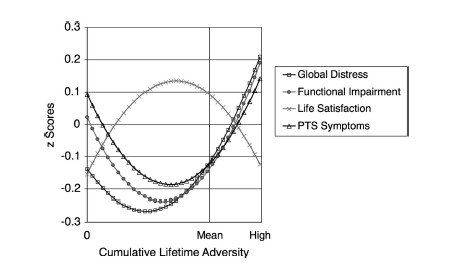
The study clearly demonstrated that "in moderation, experiencing lifetime adversity can contribute to the development of resilience."
But perhaps the most startling finding was not the relationship between adversity and resilience, but that the people who experienced low levels of adversity reported better outcomes over time than did people who had experienced no adversity at all.
In some cases, people who never faced adversity reported levels of satisfaction as low as people who experienced high numbers of adverse events.
In a sense, this study measured the same relationship between adversity and life satisfaction that André's prayer to God pleaded for. Both André's prayer and this study reveal a deeper wisdom: that humans need a certain level of adversity to enjoy a purpose-driven and satisfying life.
But what happens when adversity isn't the only factor? What happens when comfort, wealth and health are maximized? This was the focus of a famous 1968 study by John B. Calhoun published as Death Squared: The Explosive Growth and Demise of a Mouse Population.
The study, also known as Universe 25 after the series of iterations Calhoun ran, placed mice in an isolated environment that eliminated several ecological mortality pressures: food scarcity, water scarcity, predation, severe weather, disease, and emigration.
At first, the colony increased on an expected growth curve. The initial four pairs of male and female mice doubled the population roughly every 55 days and after five doublings the population reached 620 mice.
All seemed well in Universe 25.
But after 315 days, the mice began to show some troubling signs.
The rate of population growth slowed, doubling only every 145 days. Excess males, unable to find social niches, withdrew physically and psychologically and exhibited heightened violence towards other male mice. Without male mice to defend nesting female mice, females were forced to take on male roles and became more aggressive, resulting in generalized violence towards their own offspring. Birth rates dropped, and by day 560 the population began a slow and irreversible decline. Food, water, and living space remained plentiful.
By the end, any offspring produced were rejected by their mothers, left their nest prematurely and "started independent life without having developed adequate affective bonds." These mice could not engage in effective social interactions and so failed to learn roles and behaviors. Normal courtship, maternal instincts, and appropriate aggression all collapsed and female mice slowly failed to reproduce.
Male counterparts to these non-reproducing females we soon dubbed the 'beautiful ones'. They never engaged in sexual approaches toward females, and they never engaged in fighting, and so they had no wound or scar tissue...Their behavioral repertoire became largely confined to eating, drinking, sleeping and grooming, none of which carried any social implications beyond that represented by contiguity of bodies.
John B. Calhoun, Death Squared: The Explosive Growth and Demise of a Mouse Population
Calhoun's study demonstrated pathological behavioral changes in a closed population in a mortality-inhibiting environment where an expanding population eventually encountered a saturated social system with no possibility of dispersal. As the root cause of this effect was overabundance, Calhoun showed that "ideal" conditions were not, in fact, psychologically or socially healthy. Eliminating material scarcity did not eliminate the need for agency, roles, social structure, and meaningful behavioral engagement. In fact, overabundance created an existential crisis around those same elements, characterized by crowding, forced social contact, loss of viable social roles, territorial exclusion, disrupted parenting, withdrawal, and eventual societal collapse.
It is hard not to draw parallels between Calhoun's perfect Universe 25 and our world today. Just as in Universe 25, we enjoy unprecedented abundance and likewise all is not well because of the loss of clear social roles. As Calhoun demonstrated, when abundance eliminates material scarcity, the need for social roles remains. In an age of plenty, the inescapable question is: have we gone too far? Have we lost the ability to gain the resilience that hard and sometimes uncomfortable experience affords?
The honest answer is, I don't know. But I do believe that just as too much adversity can be problematic, too little adversity and too much comfort are destructive to society. The roles of men and women in modern society (especially Western society) are in question. Younger generations are opting out of courtship and men in particular are simultaneously withdrawing from traditional societal roles while also responding to the lure of fringe influences. To draw a literary analogy, some men are enticed by the allure of becoming a real version of the "beautiful ones" via the recent trend of chasing an idealized appearance through cosmetic optimization.
What, then, is the solution?
Findings from two studies cannot generalize to humans broadly, but I can't help but feel that they hint at a truth of the human condition that may point to a way out of our dilemma of abundance. Taken together, both studies point to the fact that some human systems require a challenge, or stress, to develop certain capacities. For example, the stress of physical exercise, or psychological stressors moderated by a supportive environment (such as a family unit or a team), can lead to an improved ability to manage future stress.
Stress, as a common shared experience grounded in cultural relevance - traditions, myths, and shared values - used to be a cornerstone of human development, a rite of passage that ushered adolescents into adulthood. Societies from our pre-internet world are replete with such examples: the Spartan Agoge, apprenticeships, military conscription, Boy/Girl Scouts, 4-H Club, or the Presidential Fitness Test.
When a society shares common experiences, a shared culture, they provide a common vocabulary that can link a struggle to a greater purpose, anchored by a shared sense of meaning. These shared experiences of adversity help individuals view stress as a catalyst for growth and a necessary short-term sacrifice for long-term improvement.
When a society elevates the virtues of selflessness, bravery, and fortitude, then individuals will be more likely to make the transition from serving the self to serving their community
Society needs people who are willing to sacrifice. Our social bargain relies upon a balance between limitless freedoms and suffocating order. This balance is only possible when a portion of society is willing to sacrifice some of their freedoms for others. This does not happen on its own. My belief is that the will to endure hardships for the benefit of society starts with enduring hardships in the pursuit of self-improvement. When a society elevates the virtues of selflessness, bravery, and fortitude, then individuals will be more likely to make the transition from serving the self to serving their community.
This idea is the possible origin of the word "hero." Stemming from an ancient pre-Greek origin, from before the 8th century BCE, the word "hero" meant defender, protector, or one who had done a great service to mankind. Ancient societies venerated those with the will to subordinate the self to service, and their stories are preserved within myths and stories that are still remembered today.
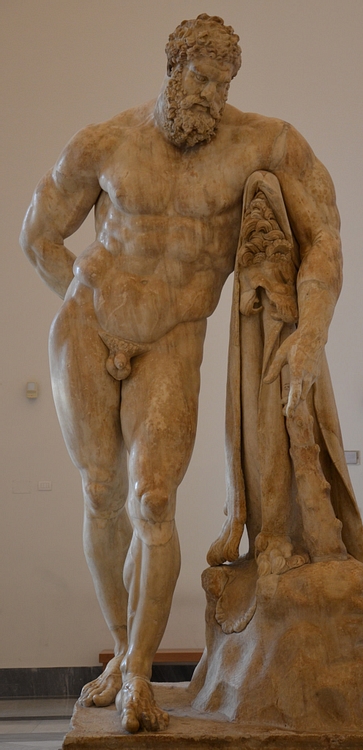
When a society can still produce people like André Zirnheld, when we can produce heroes, society can persevere. The same upbringing that put André on a path to comfort also imbued him with the will to sacrifice and to meet adversity when his community needed him. It could have been his inherited family values, or his faith, or the result of an adult life spent wrestling with philosophical questions. Or, it could have been something more fundamental. The root Zirn within André's surname has several origins from both German and French, but one interpretation indicates the origin stems from the concept of locality, while the suffix Held translates as hero or champion.
André was born into the world as a local hero, but his choices earned the promise and potential of his name, the same choice we all have to take on adversity and hardship in service to a cause greater than ourselves. To accept insecurity and turmoil so that others may enjoy the comfort of wealth and success that those sacrifices secure.